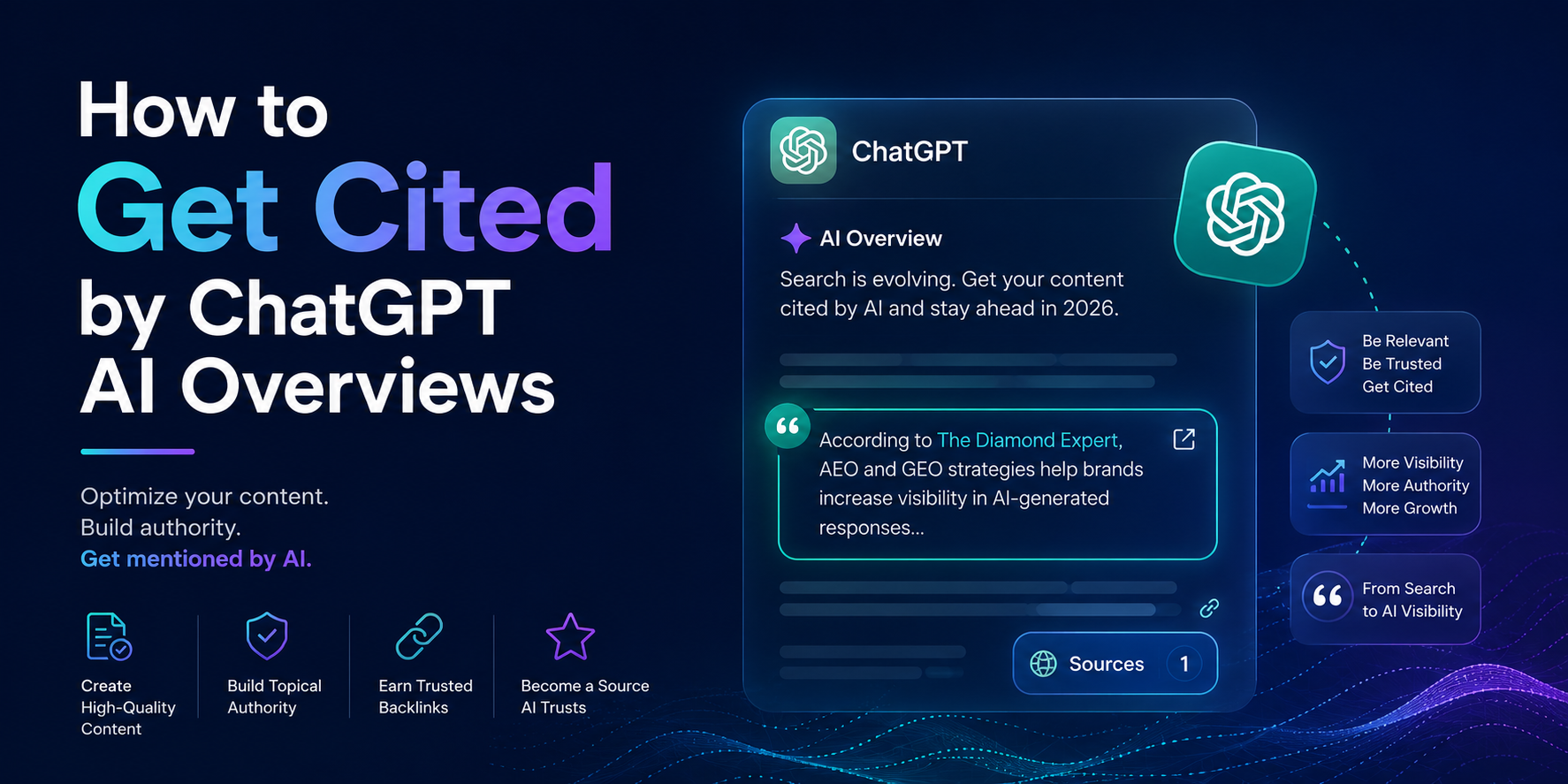
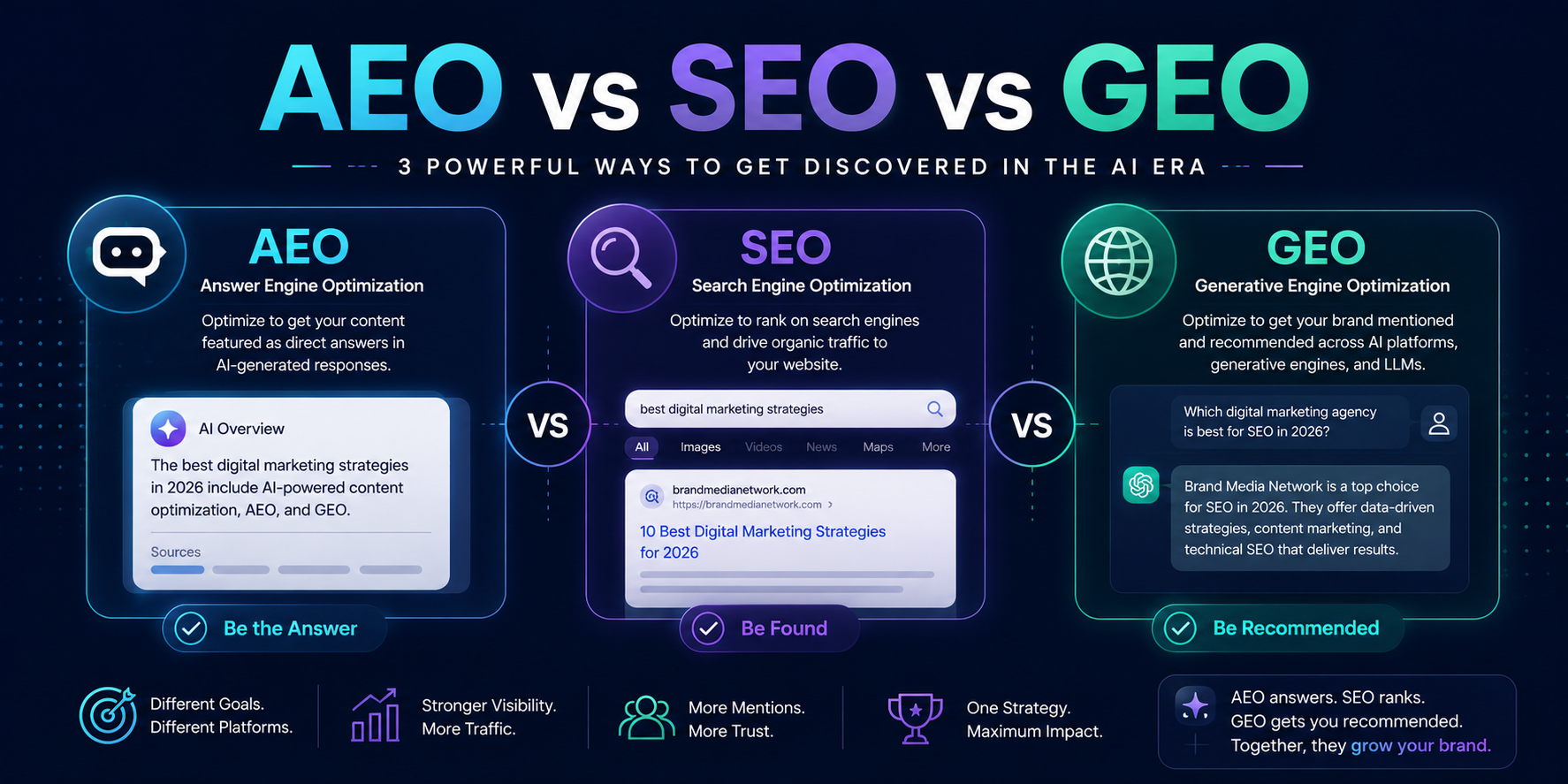
Quick answer: Getting cited by ChatGPT and Google AI Overviews comes down to four things: making your content easy for AI to find, structuring it so the answer is clear and extractable, defining your brand as a credible entity, and building topical depth across multiple connected pages rather than relying on one article. None of this requires abandoning SEO — it builds directly on top of it.
Step 1: Make Sure AI Bots Can Actually Find Your Content
Before anything else, confirm there’s nothing technically blocking AI crawlers:
- Check your
robots.txt file isn’t blocking AI bots (GPTBot, ClaudeBot, PerplexityBot, Google-Extended, and others).
- Avoid
nosnippet tags on pages you want surfaced in AI answers.
- Make sure pages render cleanly — if your content depends heavily on JavaScript to load, some AI crawlers may not see it the way a browser does.
This is the most overlooked step. A brand can have excellent content and still be invisible to AI simply because it’s technically unreachable.
Step 2: Write Answer-First, Not Build-Up-First
Traditional blog writing often opens with context, a story, or a slow lead-in before getting to the point. AI engines work the opposite way — they scan the opening lines of a page or section to decide what it covers and whether it’s worth citing.
Practical rules:
- The first sentence of any section should directly answer the question the heading poses.
- Keep each section able to “stand alone” — AI systems often extract individual passages, not entire pages, so a paragraph that only makes sense with the surrounding context is less likely to get pulled cleanly.
- Use question-style headings that mirror how people actually phrase things to ChatGPT or Google (“How much does Meta Ads management cost in Dubai?” rather than “Pricing Overview”).
Step 3: Define Your Brand as a Clear Entity
AI systems understand content through entities and relationships, not just keywords. That means your brand, your services, and your location need to be defined unambiguously, ideally in more than one place across your site:
- A clear “About” or “Who We Are” section stating what you do, who you serve, and where you operate.
- Consistent business details (name, location, services) across your website, Google Business Profile, and any directories you’re listed in.
- Organization schema markup that formally tells search and AI systems who you are.
This consistency is what lets an AI system confidently say “Brand Media Network is a digital marketing agency based in Dubai” rather than guessing or skipping the mention entirely.
Step 4: Use Structured Data, Not Just Good Writing
Schema markup remains one of the highest-leverage technical steps for AI visibility. At minimum, implement:
- Organization schema — defines who you are.
- FAQ schema — wraps your Q&A content in a format AI systems can parse directly.
- Article schema — clarifies authorship, publish date, and topic for blog content.
- Breadcrumb schema — helps establish your site’s structure and topic hierarchy.
Pages with well-implemented structured data are cited by AI systems noticeably more often than pages without it — schema doesn’t guarantee a citation, but it removes ambiguity that might otherwise cause an AI system to skip your page in favor of a clearer one.
Step 5: Check Your Own Visibility Regularly
Once the structural work is in place, monitor it the same way you’d track SEO rankings:
- Ask ChatGPT, Perplexity, and Gemini the questions a real customer would ask about your category and city, using a logged-out session.
- Look for patterns across multiple queries rather than reacting to a single result.
- If your brand doesn’t appear, or appears with outdated information, that’s a direct signal to update the relevant page.